The geography of Bitcoin mining has shifted dramatically since the network’s early days, and today miners chase a mix of cheap electricity, favorable policy, and reliable infrastructure. This article maps where mining is most profitable at the country level, why those places matter, and how miners weigh trade-offs like regulation, climate, and grid stability. Read on if you want a practical sense of where large-scale miners and savvy hobbyists are directing capital and why the landscape keeps changing.
- Why location still determines mining margins
- Electricity price and structure
- Climate, cooling, and infrastructure
- Regulatory environment and political risk
- How miners now assess the profitable mining map
- Key countries on the profitable mining map
- United States
- Kazakhstan
- Russia
- Canada
- Iceland and Scandinavia
- Georgia
- Iran
- Emerging regions to watch
- Comparative snapshot: country pros and cons
- How to choose the best country for your mining operation
- Setting up: practical steps and common pitfalls
- Financing and hardware procurement
- Operational tips from the field
- Environmental impact and how miners are adapting
- Risks that can wipe out margins overnight
- What the trend line looks like for the next five years
- Final practical checklist before you commit
Why location still determines mining margins
Bitcoin mining is fundamentally an energy conversion business: electrons into proof-of-work. That simple fact makes electricity rates and access the single largest driver of profitability, and it also explains why miners congregate in particular countries or regions.
Beyond raw price per kilowatt-hour, location affects cooling costs, access to renewable energy, tax treatment, and regulatory risk. Latency to pools, availability of hardware and parts, and the ease of securing real estate and transmission upgrades are practical concerns that add or subtract several basis points from margins.
Electricity price and structure
Electricity price is the headline metric, but the tariff structure matters more than a flat number. Miners look for low spot prices, time-of-use contracts, or the ability to sign power purchase agreements (PPAs) with industrial-scale generators.
In some places, surplus generation creates negative or near-zero prices for certain hours, and miners operate as flexible loads that soak up that excess. In other markets, power is subsidized or simply cheaper due to abundant fuel; both situations attract hash rate but also invite policy scrutiny if mining competes with households for scarce power.
Climate, cooling, and infrastructure
Colder climates reduce cooling costs and improve overall energy efficiency, which is why Iceland, Scandinavia, and Canada are attractive despite higher nominal electricity prices. Conversely, hot regions demand more investment in air conditioning and water cooling solutions.
Grid reliability, transmission capacity, and proximity to fiber for remote monitoring are infrastructure aspects miners evaluate. Frequent outages, congested grids, or long transmission distances introduce downtime risk that can quickly erode thin margins.
Regulatory environment and political risk
Regulation can turn a profitable site into an impossible one overnight, as China’s 2021 crackdown illustrated when a substantial portion of global hash rate relocated in months. Stable, transparent legal frameworks that recognize mining as legitimate industrial activity are a strong draw.
Conversely, countries with ambiguous tax rules, sudden export controls, or political instability pose concentration risk. Miners often prefer jurisdictions where they can sign multi-year contracts and have legal recourse in disputes.
How miners now assess the profitable mining map
Experienced operators build decision frameworks that score candidate sites on electricity cost, curtailment risk, tax and legal clarity, climate, and the availability of logistical support such as maintenance firms and spare parts suppliers. Financial modeling layers Bitcoin price scenarios, difficulty adjustments, and hardware depreciation across those operational metrics.
Risk management strategies vary: some miners favor geographic diversification to avoid single-country risk; others co-locate with renewable projects to lock in low carbon intensity power and predictable rates. Strategic trade-offs depend on whether a miner aims for long-term operation or short-term opportunistic margins.
Key countries on the profitable mining map
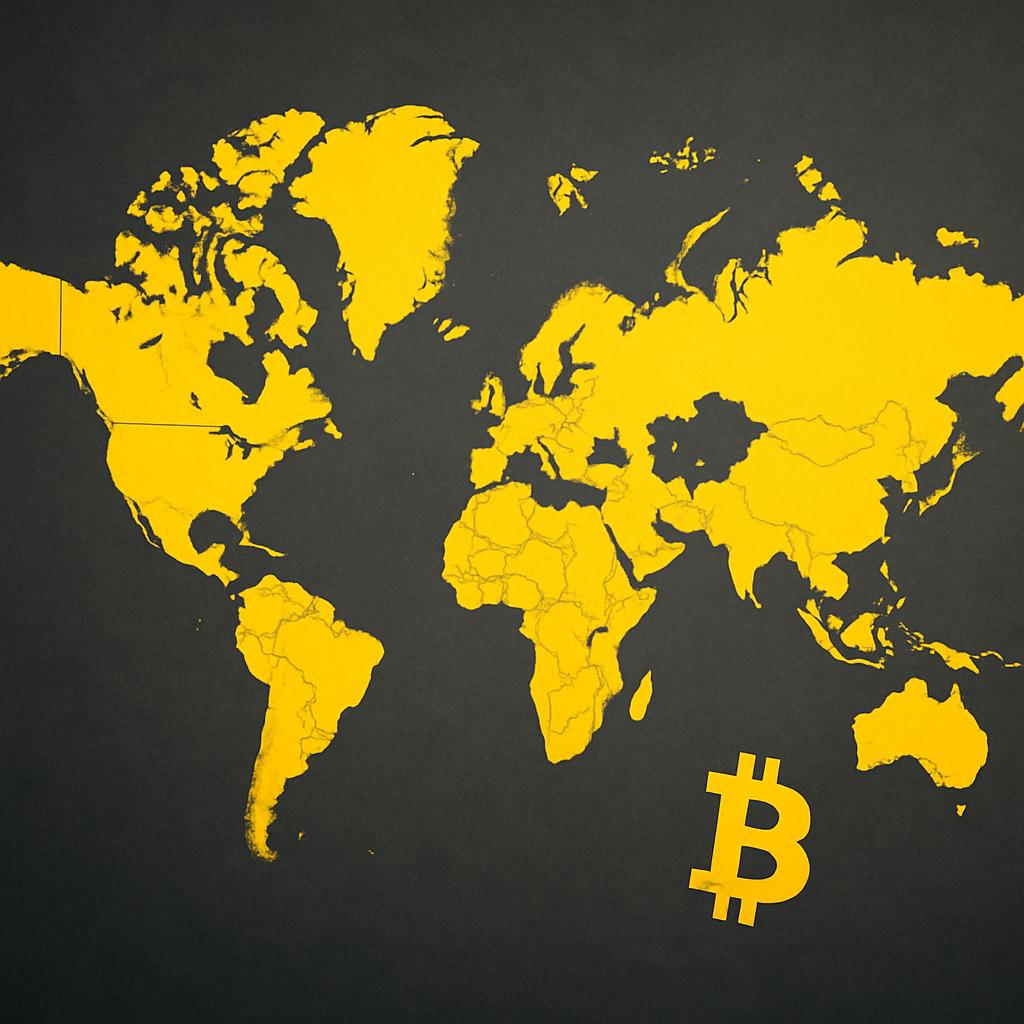
The following countries have emerged as consistent hosts for meaningful shares of global hash rate or are prominent in miners’ strategic plans. Each entry explains why the country is attractive and what risks to watch.
United States
The U.S. became the top host of Bitcoin mining capacity after China’s exit, driven by ample natural gas, wind and solar development, and a deep capital market for financing facilities. States such as Texas, Wyoming, and Kentucky have seen significant activity because of favorable regulations, inexpensive power in certain zones, and business-friendly tax regimes.
Operators value the rule of law, easy access to capital, and a mature grid with opportunities for ancillary services or bilateral PPAs. However, local permitting, environmental opposition, and rising electricity demand in some regions can squeeze prices and slow expansions.
Kazakhstan
Kazakhstan grew quickly after the China exodus due to low-cost coal-fired power and an open stance toward crypto activity, attracting many large mining operations. The country’s cheap energy made it a natural short-term refuge for miners chasing margins.
But frequent grid curtailments, government-imposed caps on energy use, and political instability have introduced outages and regulatory uncertainty. Those operational hiccups underline how cheap power alone doesn’t guarantee sustainable profitability.
Russia
Russia hosts significant mining activity thanks to abundant natural gas and coal in some regions, combined with a large domestic cryptocurrency ecosystem. Remote areas and energy-rich regions provide opportunities to negotiate attractive power contracts with utilities or industrial partners.
Geopolitical risks, the potential for sanctions, and evolving local regulation are the main downsides for international operators. Domestic miners may accept those risks differently than foreign firms that must consider compliance with cross-border legal frameworks.
Canada
Canada attracts miners with cold weather, abundant hydroelectric capacity, and a stable business environment. Provinces like Quebec and British Columbia offer low marginal power costs and established industrial energy contracts that make large facilities viable.
Transmission capacity and seasonal hydrology variability can affect price stability, but Canada’s regulatory clarity and proximity to U.S. markets make it a favorite for North American operators looking to diversify geographically.
Iceland and Scandinavia
Iceland, Norway, and Sweden have become preferred sites due to low-cost renewable energy, cool climates that minimize cooling costs, and strong internet connectivity. Iceland, in particular, leveraged geothermal and hydro resources, as well as favorable tax structures, to attract miners early on.
These countries often command higher real estate and labor costs but compensate with predictable power supply and attractive carbon profiles, which appeals to institutional investors and companies emphasizing ESG commitments.
Georgia
The country of Georgia, at the crossroads between Europe and Asia, offers cheap, often subsidized electricity and lenient regulatory treatment toward crypto activities, making it a hub for smaller to mid-sized miners. Its proximity to major markets and relatively low operating costs make it attractive for European miners seeking diversification.
However, political stability and reliance on hydroelectric generation mean seasonal price swings and potential curtailment during drought years, which operators must model into risk assessments.
Iran
Iran has supported domestic mining as a form of industrial electricity demand, but the sector operates under tight government controls and export restrictions. Miners in Iran benefit from some of the world’s lowest domestic electricity prices, subject to official licensing and supervision.
International sanctions, regulatory uncertainty, and the risk of government seizure or forced export of miners make Iran a high-risk environment for foreign investors despite the low operating costs for domestic operators.
Emerging regions to watch
Countries in South America, parts of Africa, and Central Asia are exploring mining as a way to monetize energy resources or absorb surplus generation. Brazil, Paraguay, and some Eastern European nations have notable potential where competitive power and stable policy converge.
Resource nationalism, grid constraints, or nascent legal frameworks are common challenges in these markets, so investors typically expect a higher risk-premium while watching for policy shifts that could open large opportunities.
Comparative snapshot: country pros and cons

The following table summarizes strengths and risks for selected countries so readers can compare at a glance. It’s a high-level guide rather than a substitute for detailed due diligence on contracts and local law.
| Country | Why attractive | Main risks |
|---|---|---|
| United States | Large power market, capital access, regulatory clarity in many states | Local permitting, rising demand, variable state policies |
| Kazakhstan | Low-cost energy, open market entry | Grid curtailment, political instability |
| Russia | Energy abundance, large domestic ecosystem | Sanctions, geopolitical risk |
| Canada | Cold climate, hydro power, stability | Transmission limits, seasonal hydrology |
| Iceland/Scandinavia | Renewable power, cold climate, stable policy | Higher operating costs, capacity constraints |
| Georgia | Cheap power, favorable taxes | Seasonal price swings, small market |
| Iran | Very low domestic power prices | Sanctions, strict controls, high political risk |
How to choose the best country for your mining operation
Choosing a location is a multi-criteria decision. Financial modeling should run scenarios across power price curves, difficulty adjustments, halving events, and hardware depreciation; operational modeling should stress-test for grid outages and logistics delays.
Here’s a practical checklist miners use when evaluating countries and specific sites to host equipment.
- Average and marginal cost of electricity, plus tariff schedule and availability of PPAs.
- Grid reliability metrics and historical curtailment data.
- Local regulatory stance, licensing requirements, and tax treatment for crypto mining.
- Climate and cooling needs, plus proximity to spare parts and maintenance services.
- Security, political stability, and the ability to repatriate revenue or move equipment if needed.
Setting up: practical steps and common pitfalls
The operational steps of setting up a large mining farm are straightforward in concept but messy in execution: secure land or a colocation partner, negotiate power, procure hardware, install cooling and security, and operationalize monitoring and maintenance. Each step exposes the business to different local legal and logistical requirements.
Common pitfalls include signing power contracts without clear escalation clauses, underestimating import duties on hardware, and failing to model seasonal power swings. Experienced operators spend as much time on legal and procurement teams as they do on electrical engineers during the setup phase.
Financing and hardware procurement
Major miners finance operations with a mix of equity, debt, and long-term bilateral arrangements with hardware vendors or host sites. Securing favorable payment terms from ASIC suppliers and building relationships with logistics providers are critical to keeping CapEx under control.
Buyers should also consider equipment standardization to simplify spare parts inventory and personnel training; bespoke rigs raise support costs and slow repairs when failures occur.
Operational tips from the field
On a trip to West Texas in 2022, I toured a mid-sized facility where the operators emphasized the importance of flexible load management and strong ties with the local utility. They used demand response contracts to smooth electricity costs and maintain uptime during peak grid stress.
Smaller operators I spoke with in Canada and Iceland repeatedly highlighted that good relationships with municipal authorities speed permitting and reduce the likelihood of sudden regulatory surprises. These human connections often matter as much as spreadsheets when scaling operations.
Environmental impact and how miners are adapting
Mining’s energy footprint draws scrutiny from investors and regulators, which pushes miners toward renewables or offset strategies. Large operators increasingly sign PPAs or build co-located renewable projects to reduce carbon intensity and secure predictable long-term prices.
Another trend is using curtailed or stranded energy—mining can be a flexible off-taker for excess power, improving grid economics and helping integrate variable renewables. That model works best where contracts and technology allow miners to ramp consumption up and down without heavy penalties.
Risks that can wipe out margins overnight
Beyond Bitcoin price volatility and periodic mining halving events, regulatory shocks are the most pernicious risk. Sudden bans, export restrictions on hardware, or reclassification of mining income for tax purposes can change projected returns dramatically.
Operational shocks such as fuel price spikes, prolonged grid outages, or supply chain disruptions for spare parts can create extended downtime. Prudent operators maintain geographic diversification, contractual protections, and contingency reserves to survive such events.
What the trend line looks like for the next five years
Expect continued geographical diversification of hash rate as miners chase renewables and predictable policy environments. The U.S. and certain European markets should remain central for large institutional players, while flexible, opportunistic miners may target emerging markets that offer episodic arbitrage opportunities.
Technology advances and increased recycling of heat from data centers could shift the calculus by reducing cooling costs and opening new co-location models with industrial partners. At the same time, regulatory pressures and investor focus on carbon intensity will likely accelerate the move toward cleaner power sources.
Final practical checklist before you commit
Before committing capital, run a thorough legal review, contract the power supplier with clear SLA and curtailment terms, verify the grid and internet latency reports, and stress-test the financial model under adverse price and difficulty scenarios. Make sure hardware warranty and service networks are confirmed and that permits are in hand or on a clear path to approval.
If possible, start with a smaller, modular deployment to test local conditions and build relationships with utilities and local authorities; scaling incrementally reduces exposure while providing real data to refine models and operations.
If you want continuous updates and regional deep dives on mining economics, visit our site for more maps, data, and practical guides. Follow the latest analyses and case studies that explain where miners are putting capital and why those choices evolve over time.
For additional articles and ongoing coverage, visit https://news-ads.com/ and explore other materials on our website.